
Being one of the first styles of theatre in history, Greek Theatre developed in 6th century BCE. It was created to pass down Greek history and tell their stories in an artistic form. Earliest Greek Theatre focused to honour their God Dionysus, the son of Zeus. He was the God of wine, fertility, and revelry. Many conventions of ancient Greek theatre are still passed down into modern theatre today.
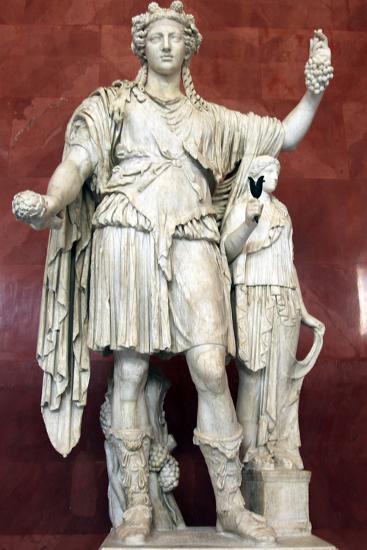
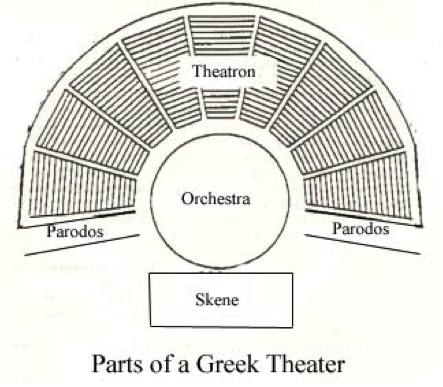
Dionysia was an ancient festival made to honour Dionysus and was were most early Greek Theatre was performed and developed. ‘The Theatre of Dionysus’ was the first-ever Greek theatre built, and after gaining popularity, similar theatres had spread across Greece. This included the Orchestra, a circular stage where performers would sing, dance and act. The Theatron, where spectators sit above the orchestra and watch the performance, the Skene, which was the back of the stage, also commonly decorated and used as a backdrop for the play, and were actors could enter/exit in, and the Parados, where chorus members could make their entrance/exit, and spectators could leave after the show. These theatres were also outdoors and open, which allowed lots of natural light for the shows.
Greek Theatre consisted of three principal dramatic forms, consisting of tragedies, comedies and satyr plays. Aristophanes was a famous playwright, and known as one of the key figures in establishing ancient Greek comedy. He was most known for his plays about mocking powerful men in politics.

Most costumes and makeup in Greek theatre stayed similar, most actors wore Chitons (similar to a robe), Chlamys (a short cloak) and Kothurnus (lace up-boots). What makes Greek Theatre costumes unique however is their use of different masks. These masks were used to represent different emotions and facial expressions, making it especially clear for the spectators at the back of the theatron. Many early Greek theatre plays often only consisted of one to three actors, so the masks helped distinguish different characters.
Bibliorgaphy:
Slideshare.net. (2008). Greek Theatre. [online] Available at: https://www.slideshare.net/mharring/greek-theatre [Accessed 29 Jan. 2020].
Pbs.org. (n.d.). The Different Types of Greek Drama and their importance. [online] Available at: https://www.pbs.org/empires/thegreeks/background/24c.html [Accessed 29 Jan. 2020].

 Taylor's Document Diary - VCE Theatre Studies 2020