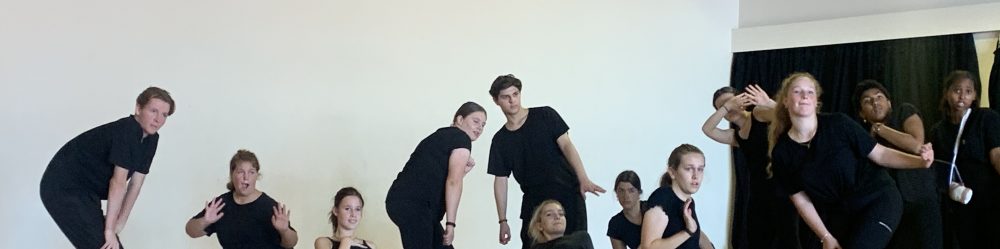
Elizabethan Drama is a style of theatre originated in 1550s England, during the reign of Queen Elizabeth 1. It was originally only recognised as a ‘period’ of theatre, however, as it grew its own unique characteristics and theatre conventions, it is now recognised as a style of theatre itself. Elizabethan Theatre was also known as ‘renaissance theatre’, as Elizabethan dramas were much more morally complex and diverse opposed to many dramas in the past which focused on simple morality plays.

Elizabethan Theatre was most often performed in public theatres, however many were still open-air theatres as natural daylight was still vital for everything to be seen on stage. The ‘Apron’ stage was most commonly seen, which meant the stage was surrounded by the audience on 3 sides.
Most (and all early) Elizabethan plays were featuring men, as many women were not allowed to be actors during this time. The costumes male actors wore were often a shirt with stockings, sometimes corsets were worn too. Once women were eventually featured in Elizabethan plays, they commonly wore multiple-layered gowns, and wore makeup to emulate Queen Elizabeth 1.

Common props seen in Elizabethan theatre consisted of daggers, small, but sharp edged blades, bottles of alcohol, typically wine, whips, helmets and armour for fighting scenes, candles and torches, manuscripts, etc. Larger props and furniture was eventually introduced, such as beds, thrones, cannons, etc.
Common conventions of Elizabethan theatre that helped it distinguish itself as a genre included ‘aside’, where characters are ‘on the side’ of the stage, and address the current situation in the story to the audience directly. Eavesdropping was also a common plot trope, and a convention still used in theatre today. One of the biggest conventions that set Elizabethen theatre apart however, was its use of poetic and dramatic dialogue. An Elizabethan era playwright who was known for this unique kind of dialogue Christopher Marlowe, famously known for his tragedy plays.
Bibliography:
Hanson, Marilee. “Elizabethan Theatre” https://englishhistory.net/shakespeare/elizabethan-theatre/, February 10, 2017
Www2.anglistik.uni-freiburg.de. (n.d.). Drama: Types of Stages. [online] Available at: https://www2.anglistik.uni-freiburg.de/intranet/englishbasics/DramaTypesofStages01.htm [Accessed 29 Jan. 2020].
Elizabethanenglandlife.com. (n.d.). Elizabethan Era Theatre Costumes. [online] Available at: http://elizabethanenglandlife.com/Elizabethan-Theatre-Costumes.html [Accessed 29 Jan. 2020].
Bardstage.org. (n.d.). Globe Theatre Props. [online] Available at: http://www.bardstage.org/globe-theatre-props.htm [Accessed 29 Jan. 2020].
thedramateacher.com. (n.d.). Elizabethan Theatre Conventions. [online] Available at: https://thedramateacher.com/elizabethan-theatre-conventions/?__cf_chl_jschl_tk__=45549898677886634a105affec57de921716a55b-1580257045-0-AdSKATk57V_Mqf4f_jmozhfHzUWT8yH5f_WxrEeAgezBS9zAYFKuBg0dgzUglUSi_o0jnwQF9VZrBpR7mYAcwWvoB0Wa-z_aPE0t05397bAD8APAyESiMNz2S8ojwV7BQ71aHfZlqHxZ4API9aHQD-blkKj7M7mcV4U3v7G4h4GNO58FAKGu5yrEECCYeY60ZUd48DUf0kACsKbNycE9eEUAQN-_B3QWUSsjceSH3cLqMy099DCbFUU0FpRu5-peZ6gYvDRS5DlVOvUz51EaiW7aUYTOqHFlGGlUKY4cDtkWnuE9y6_rPyaX8phadjJB7Q [Accessed 29 Jan. 2020].

 Taylor's Document Diary - VCE Theatre Studies 2020