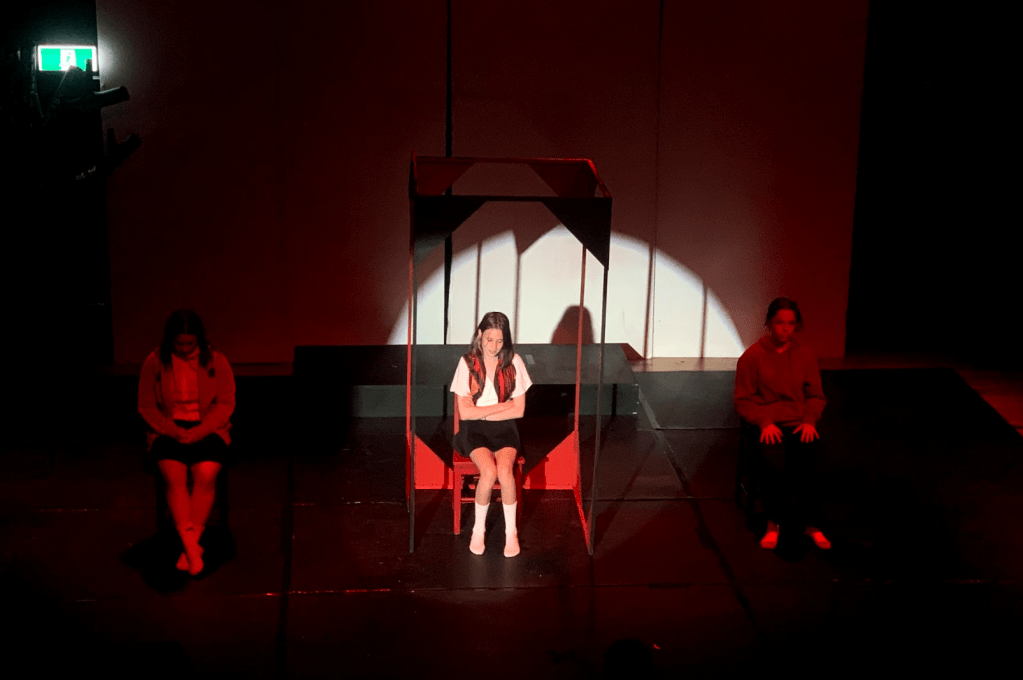
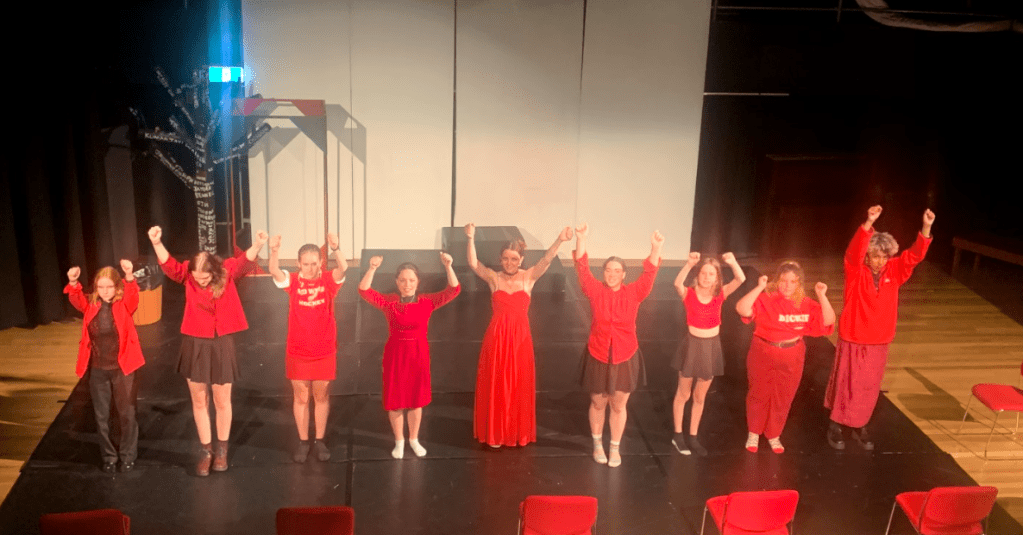
After weeks of Tech Runs, our final performance for TOTC was successful. Our use of theatrical elements, production roles, and storytelling were able to create a compelling performance that inspired the audience. Another group that was able to compel the audience was A Polite Protest. The group took inspiration from a variety of modern theatrical styles, such as feminist theatre, queer theatre, and epic theatre. They used a broad range of non-naturalistic styles to create a sense on discomfort and a confrontational feeling for the audience; emphasising the message their show intended to spread. Their minimalistic use of set and props (in comparison to our groups’ use) heightened their story and action, and symbolised the raw content of the play. The fragmented use of props and costuming and lack of “glamour” om stage highlighted the vulnerability of the play, helping to establish a personal actor-audience relationship. This relationship in maintained and grows throughout the show. In the end, each cast member is dressed in red (an element of feminist theatre style), symbolic of each character becoming stronger and beating down the oppression they are faced with.
An example of their use of red (set & lighting), and minimalist setsTheir use of red costuming to create a symbolic message
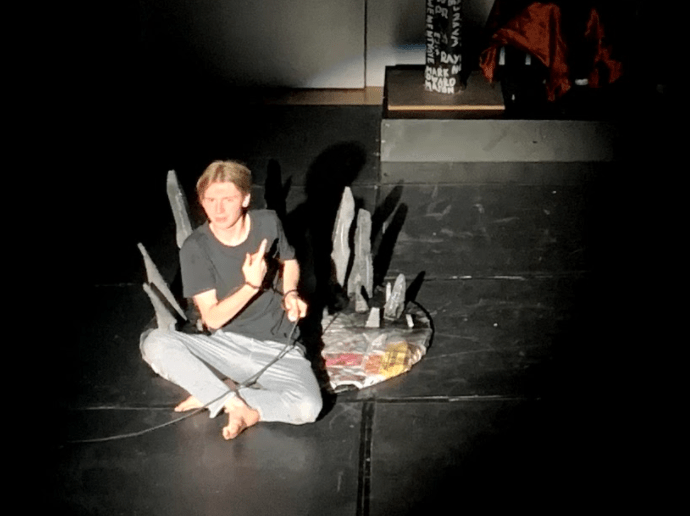
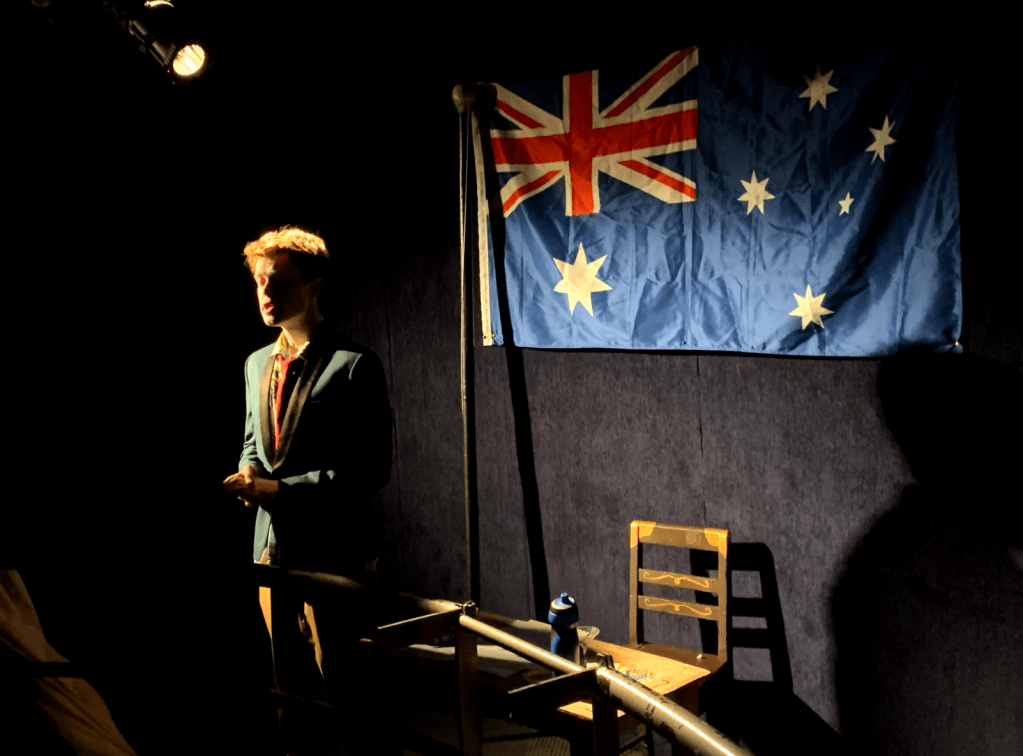
In our Production, The Tale of Two Cities, we wanted to make set and props a centre part of our show, as they establish the surroundings, and nature of each character. My character, who symbolises the upper-class in a snobby comical manner, is seated in luxury. A comfortable chair, with a table cloth covering a circular table, supplied with a wine glass, bottle, and laptop; which are all props used by my character in the show. Declan’s character, who plays a satirical politician, is surrounded by the australian flag, emphasising his patriotism, and seated at a high desk to symbolise his power and influence in the government system. Orlando’s character is part of the working-class, and stuck on a gravel-like base. Heightening his uncomfortable surroundings and exaggerating the size of his confined area. The gravel is symbolic of the inequalities his class faces, and a metaphor for the treatment he had gotten from government officials (Declan’s character). We had created this prop in our “Upcycling Materials” workshop.
The Theatre Of Happening class by Elle, Joley & Yasmin was an engaging, interactive class, that managed to hold the attention of the class and help them come up with creative ideas. Theatre of the Happening consists of creating theatre in the current moment and in present events. Performing in normal everyday locations, contrasting to the typical theatre. The group performed a surprising show over the class call, happening in a normal environment over a set-up play in a theatre. Theatre of The Happening uses sock value and the element of surprise to keep the audience engaged and intrigued.
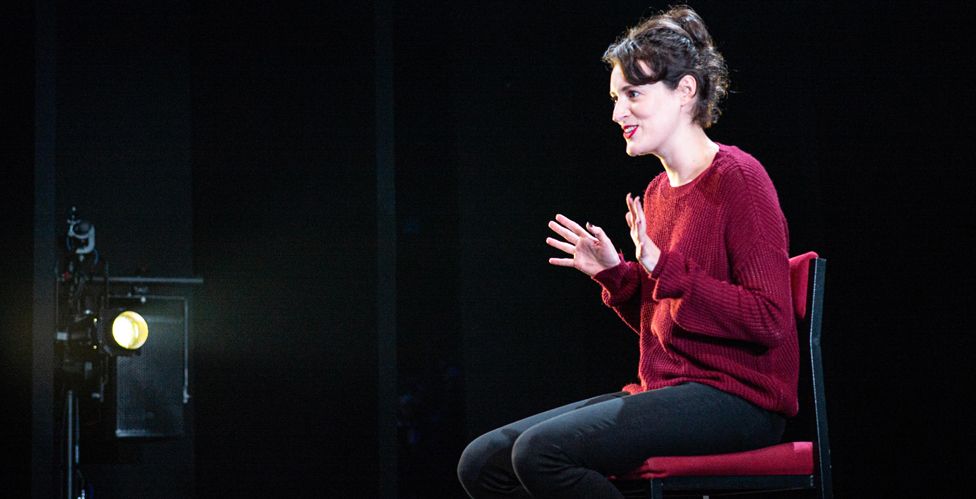
In Fleabag, starred and directed by Phoebe Waller Bridge, alongside Vicky Jones, the cast and crew create a raw, vulnerable performance; with many laughs along the way. Set and costume designer Holly Pigott uses a minimalistic yet effective set to draw more emphasis on Waller Bridge’s performance. The red inner square contrasts the outer white part of the stage, enhancing elements of feminist theatre in a broad theatrical style. Pigott matches the red inner square in costuming with Fleabag’s red jumper worn on stage. Emphasising Fleabag’s importance on the piece and significance. Sound Designer Isobel Waller Bridge uses sound effects to establish settings and add comical effects to Fleabag’s stories.
In our production, The Tale of Two Cities, we used a variety of costuming to distinguish each character. For Declan’s role, where he mocks and parodies political figures, we dressed him in a proper suit, matched with a vibrant Hawaiian shirt for the satirical element and comical effect. For my character’s role, where I play a snobby upper-class person, I wear a soft, luxurious robe, matched with slippers and a watch; emphasising his expensive taste. My character often carries around a wine glass and bottle to exaggerate his drinking addiction and draw comparison to the public housing residents he labels as ‘alcoholics’ himself. For Orlando’s character, whose a young adult living in the locked-down public housing tower, we dress him in a plain t-shirt and pants. Lacking any extravagance or detail, symbolising his little amount of money to be able to afford extravagant clothes like the other two characters.
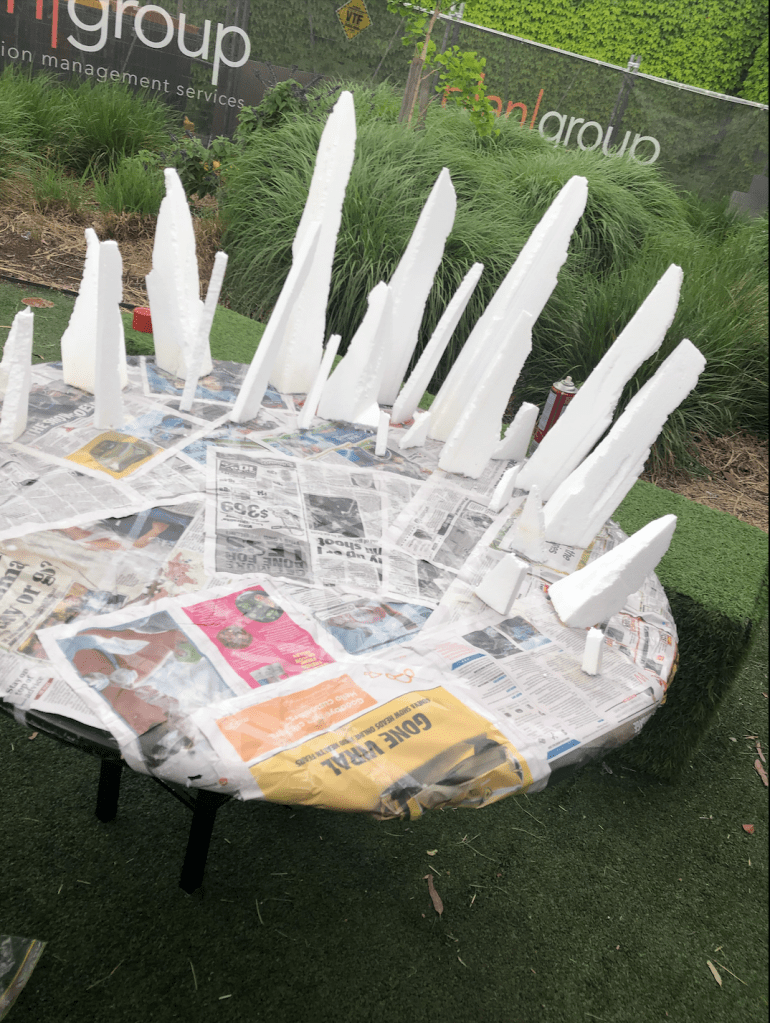
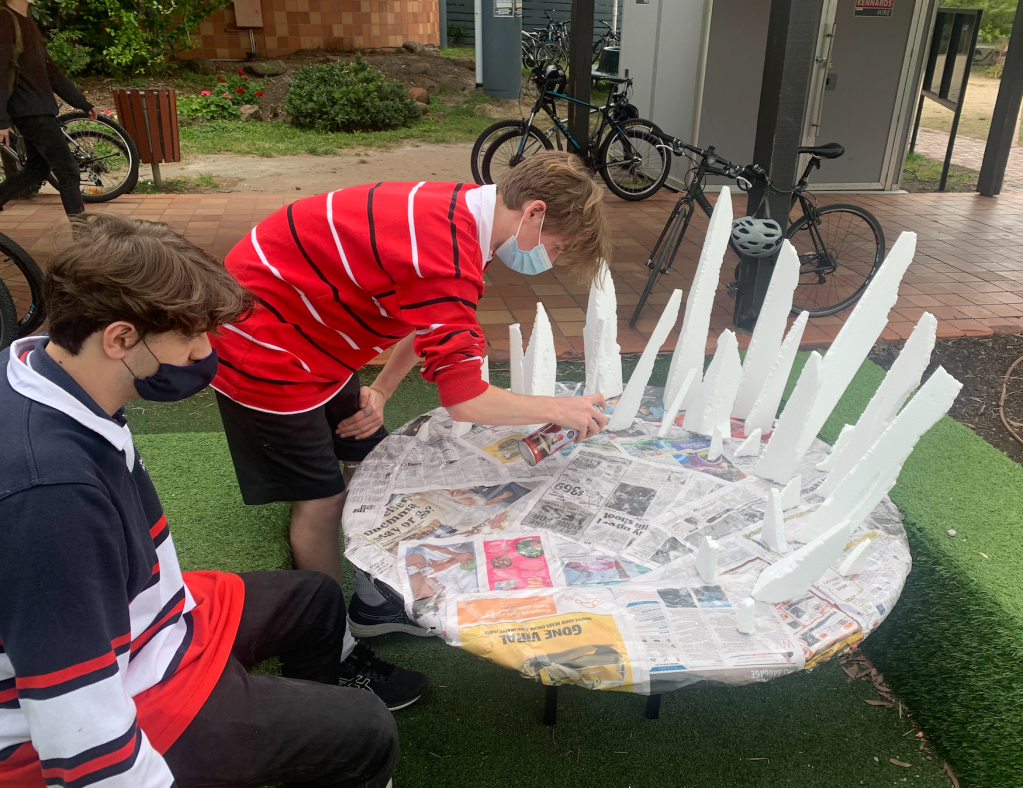
In our practical class, we learned to upcylce old materials to create new props in a sustainable way. Our group created an abstract dungeon/cage for Orlando’s character. The dungeon almost represents a throne, however is made of gravel, highlighting the inequality Orlando’s character faces and a symbolic juxtaposition to the higher classes. To create the dungeon, we hot glued pieces of cut up styrofoam onto a wooden base, sprayed it down with black paint to give it the “gravel effect”, and wrapped the base in newspaper. The newspapers acting as a symbol of how his character was portrayed in the media at the time and how his image was controlled by them. He is trapped in a dark and cold environment, and the public views him in ways the media wants him to be seen.
The Unpainted PropAdding an extra coat to make sure the prop is strong
Today, our group had our first tech run, inducing lights, music, and correct props and costumes. I’ve memorised the majority of my lines, however I still need to rehearse my third monologue at home. During the tech run, I needed to look at the script a few times. I also need to work on my projection, specifically during my first monologue, where I talk over the backing track. I have to make sure my voice isn’t washed out in the music. We’re also unsure about my set. My character needs to be elevated off the ground to symbolise the power imbalance between the other characters, yet we are unsure what set pieces to use to create that. My costuming has been decided.
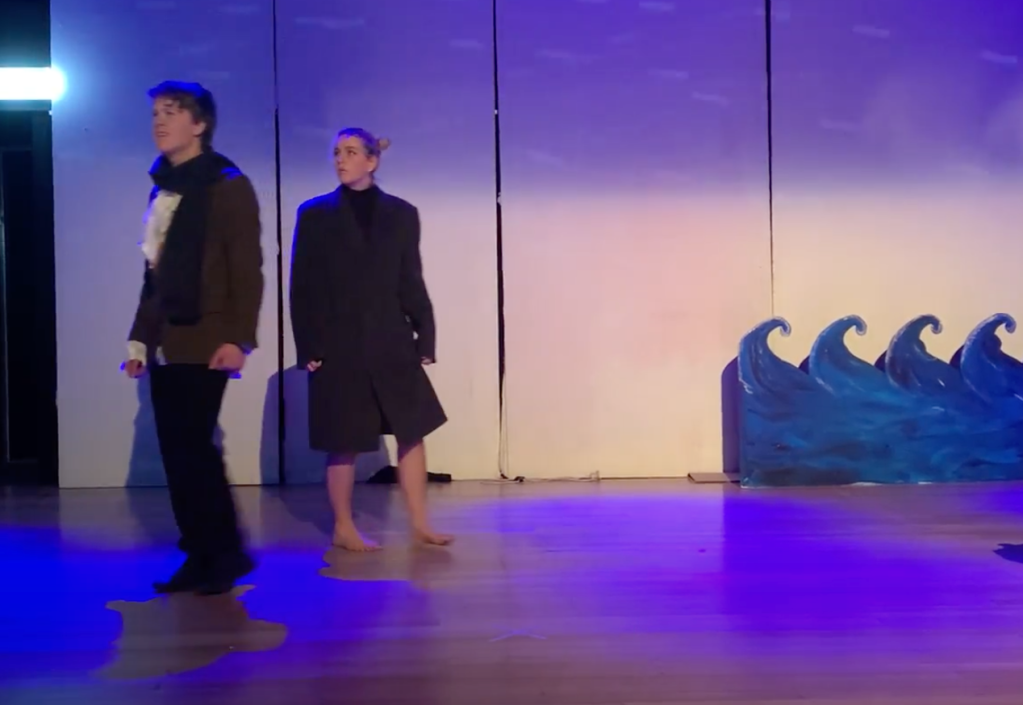
April, Declan, and Grace performed a group monologue from multiple excerpts from Frankenstein. In one of the scenes, The Creature (played by April) pleased Victor (played by Declan), to create him another creature he can emotionally connect with and ‘run away with’. The creature expresses feelings of sombre and sadness, yet also feelings of frustration as he’s been faced with the harsh reality of societal norms. Victor however has almost a juxtaposed mood, mad, and almost feeling guilty for creating The Creature at all, denying The Creatures pleads to create another creature. The contrast of April’s soft tones with Declan’s harsh cruel shouts creates a feeling of anxiety and sympathy for the characters. Their use of blocking and spacial awareness also helps exaggerate their emotions, emphasising the context of the story.
Declan and April’s use of blocking on the stage to emphasise their ideas and context of the play.
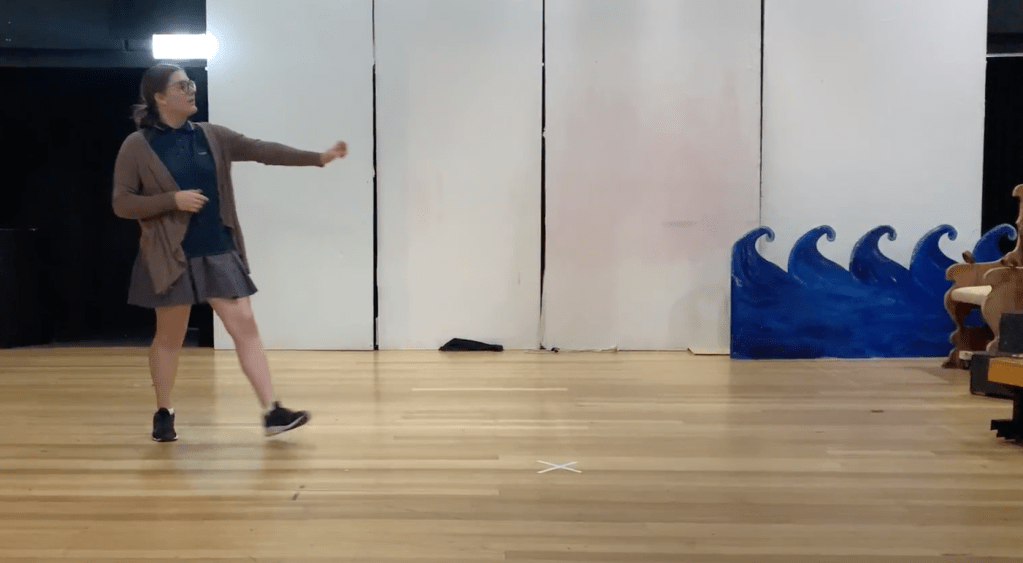
Lindsay performed a monologue from Pygmalion, she plays Mrs Pierce, a snobby maid for the prestigious Henry Higgins. In this scene, she re-introduces Eliza Doolittle to Henry, Eliza pleading Henry to help her become a ‘classy lady’. Mrs Pierce subtly makes fun of her, judging her for being part of the lower class and speaking with a Cockney accent. Lindsay interprets Mrs Pierce with a posh British accent, her body stance a proper posture, and her nose pointing up. She looks around the stage and points to different areas, interacting with different ‘objects’, showing her spacial awareness, thus creating a setting and atmosphere for the monologue.
Lindsay uses techniques learnt in the mime workshop to create a setting for the performance.
The 2016 rendition of Jane Eyre, directed by Sally Cookson, explored the story in a ‘new-age’ light, using unique set design and creative direction, along with the talented cast. First published in the 19th century, author Charlotte Bronte had written the story based off many of her own life experiences. Jane Eyre being the story of a young orphan child, growing up in an unpleasant environment with her aunt. Throughout the play she grows and evolves, using her troubled past to develop as a character. She enters school, stands up for herself, loses friends, and grows into a young adult, falling in love with Edward Rochester (the man which who she works for), and eventually getting married.
For the production team to truly understand the meaning and context of the story, a Dramaturg is an extremely vital role in a production, especially for a historic story such as Jane Eyre. A dramaturg’s role is to explore contextual research into a play’s history and creators, to make the details in the play authentic, and true to the original story. The dramaturg for this rendition of Jane Eyre is by Mike Akers.
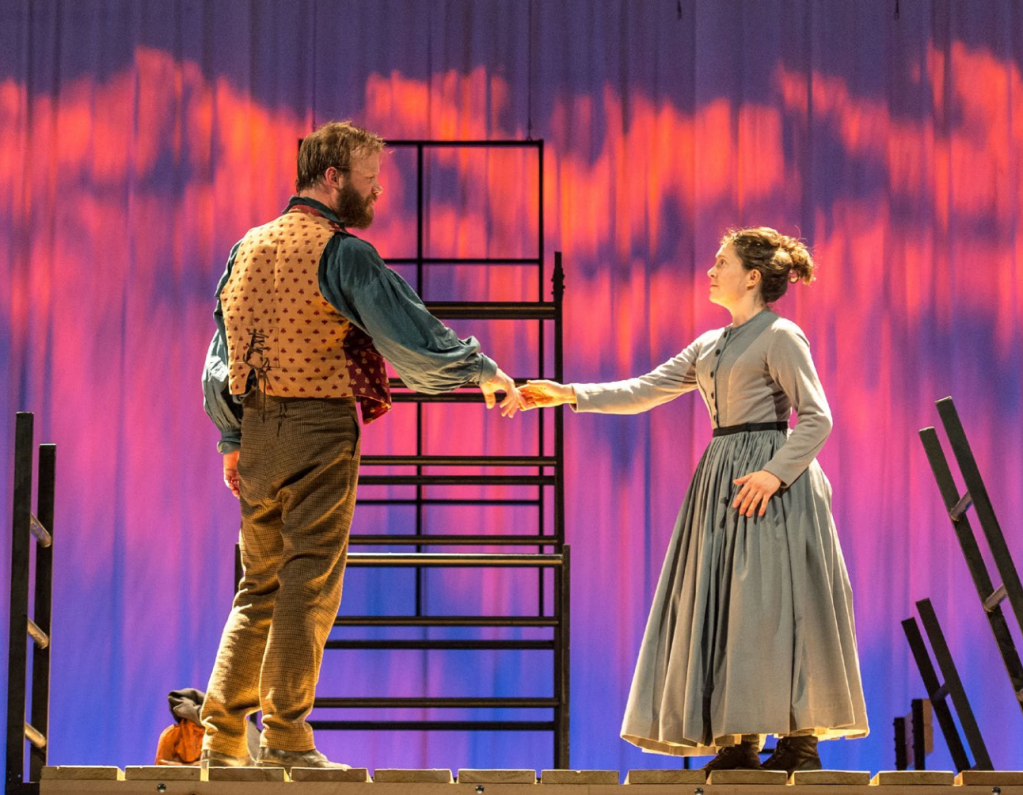
The set, designed by Michael Vale, was a key component of this rendition of the performance. A minimalistic set was used, with wooden platforms used across the stage, commonly places at different heights to symbolise power imbalance between each character, thus representing levels. Metal ladders were also another key component to the set, as they acted as a symbol of the character’s wanting to “reach up” to attain their true dreams and desires, working up to their goals.
Lighting was another production role that brought the performance to life. Lighting helps create an atmosphere for a performance, emphasise emotions from characters, and connect with the audience on a deeper level. Lighting designer, Aideen Malone uses naturalistic lighting to compliment the minimalist set throughout the play, making the moments were intense lighting was used even more powerful. In the ‘Red Room’ scenes, symbolic of Jane being completely controlled by the adults around her and finally having to face her inner demons as a child, red lighting is used to discomfort Jane and exaggerate her anxiety to the audience.
In this photo from the production, warm, pink lighting is projected onto the background, to create an inviting and ‘safe’ feeling environment, and emphasising Jane and Rochester’s romance.
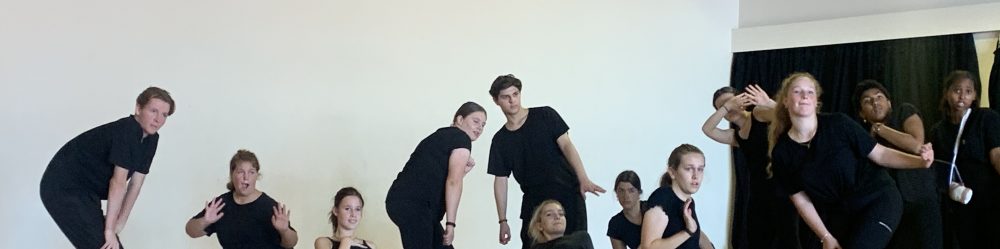
In this class, we researched the origins of Mime movement, and how it is still used and prevalent in modern works today. Mime is a theatrical form used to suggest actions, create characters, and tell stories, all without speaking. Mime focuses on body movement, and the power to convey a character by only using body definitions. In our Laban workshop, we learnt more about using body movement to represent a character. We explored the three key components of mime, also known as ‘the 3 Fs of mime’, Force, Face, and Focus. We experimented with different kinds of mime tasks, such as ‘pulling a rope, ‘climbing up stairs and ladders’, ‘lifting/using an object’, etc. Each having the ‘three Fs’ as key components to making the task look realistic. For example, in the ‘pulling a rope’ task, there was a large emphasis on force, as we need to look like we’re pulling really tightly on the imaginary rope. We want our focus to be on it, so it puts more emphasis on the rope and looks more realistic to the audience. Facial expressions are also extremely vital, depending on the character (struggling, finding it easy, etc.) to further place importance on the rope and create an overall tone and atmosphere for the mime character we are playing.
 Taylor's Document Diary - VCE Theatre Studies 2020