Posted in Development

Set/Props in TOTC

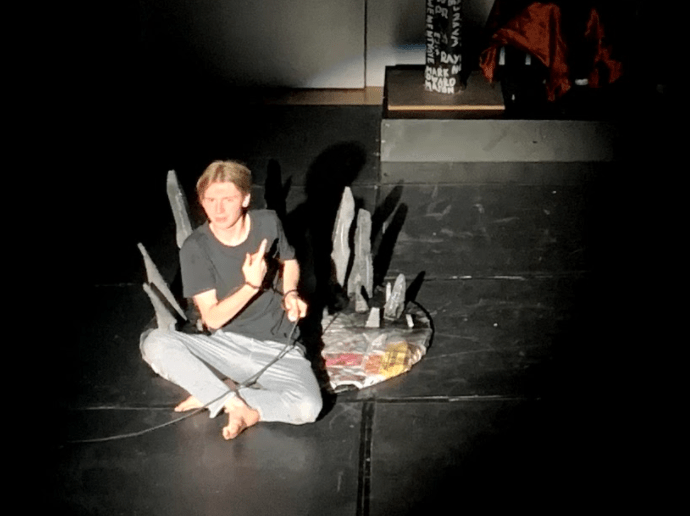
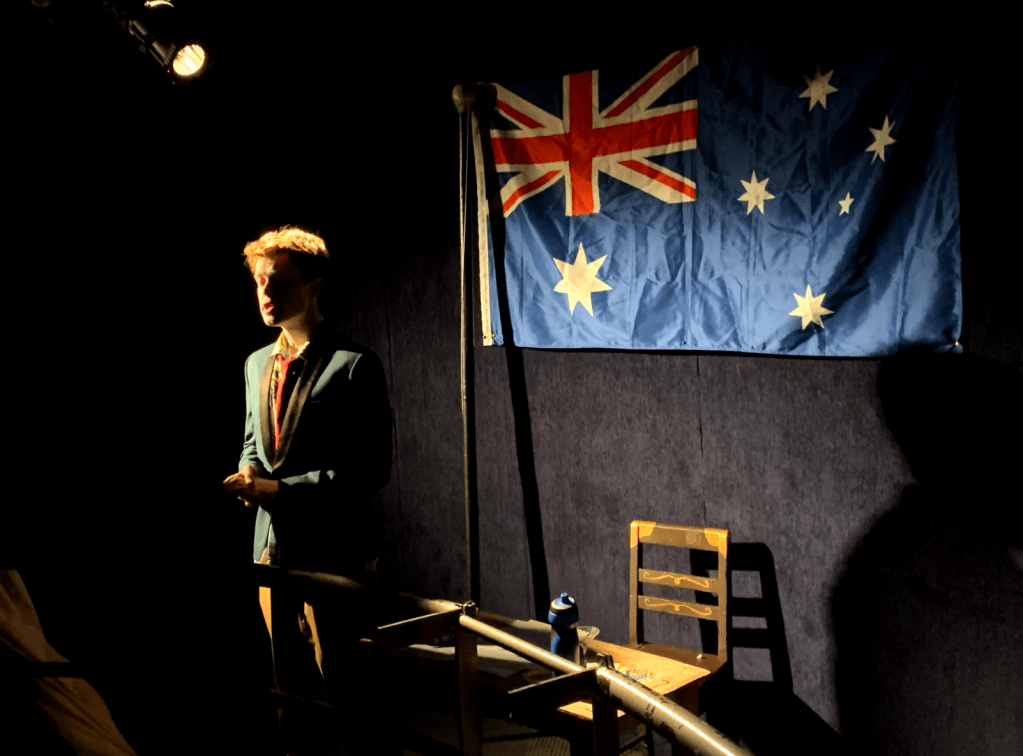
In our Production, The Tale of Two Cities, we wanted to make set and props a centre part of our show, as they establish the surroundings, and nature of each character. My character, who symbolises the upper-class in a snobby comical manner, is seated in luxury. A comfortable chair, with a table cloth covering a circular table, supplied with a wine glass, bottle, and laptop; which are all props used by my character in the show. Declan’s character, who plays a satirical politician, is surrounded by the australian flag, emphasising his patriotism, and seated at a high desk to symbolise his power and influence in the government system. Orlando’s character is part of the working-class, and stuck on a gravel-like base. Heightening his uncomfortable surroundings and exaggerating the size of his confined area. The gravel is symbolic of the inequalities his class faces, and a metaphor for the treatment he had gotten from government officials (Declan’s character). We had created this prop in our “Upcycling Materials” workshop.
This image has an empty alt attribute; its file name is screen-shot-2020-12-07-at-12.26.58-am.png
A shot of Orlando using the prop in our Tech Run
Posted in Development

Costuming in TOTC

In our production, The Tale of Two Cities, we used a variety of costuming to distinguish each character. For Declan’s role, where he mocks and parodies political figures, we dressed him in a proper suit, matched with a vibrant Hawaiian shirt for the satirical element and comical effect. For my character’s role, where I play a snobby upper-class person, I wear a soft, luxurious robe, matched with slippers and a watch; emphasising his expensive taste. My character often carries around a wine glass and bottle to exaggerate his drinking addiction and draw comparison to the public housing residents he labels as ‘alcoholics’ himself. For Orlando’s character, whose a young adult living in the locked-down public housing tower, we dress him in a plain t-shirt and pants. Lacking any extravagance or detail, symbolising his little amount of money to be able to afford extravagant clothes like the other two characters.

Declan’s “Politician” Costume

Posted in Development

Upcylcing Materials

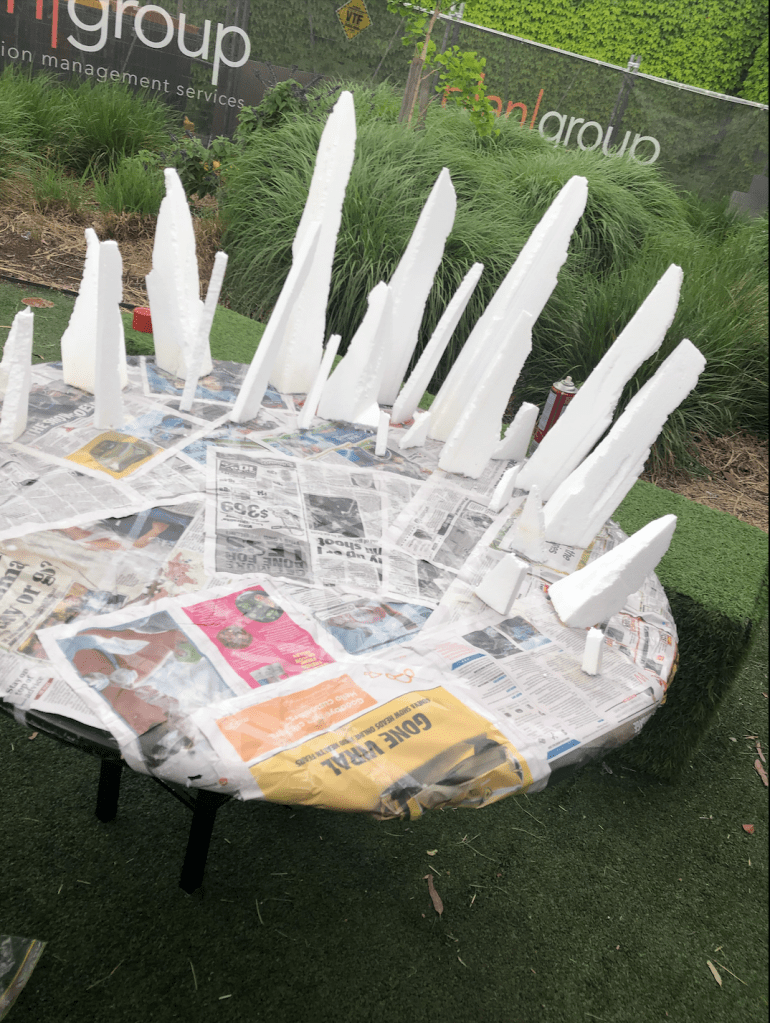
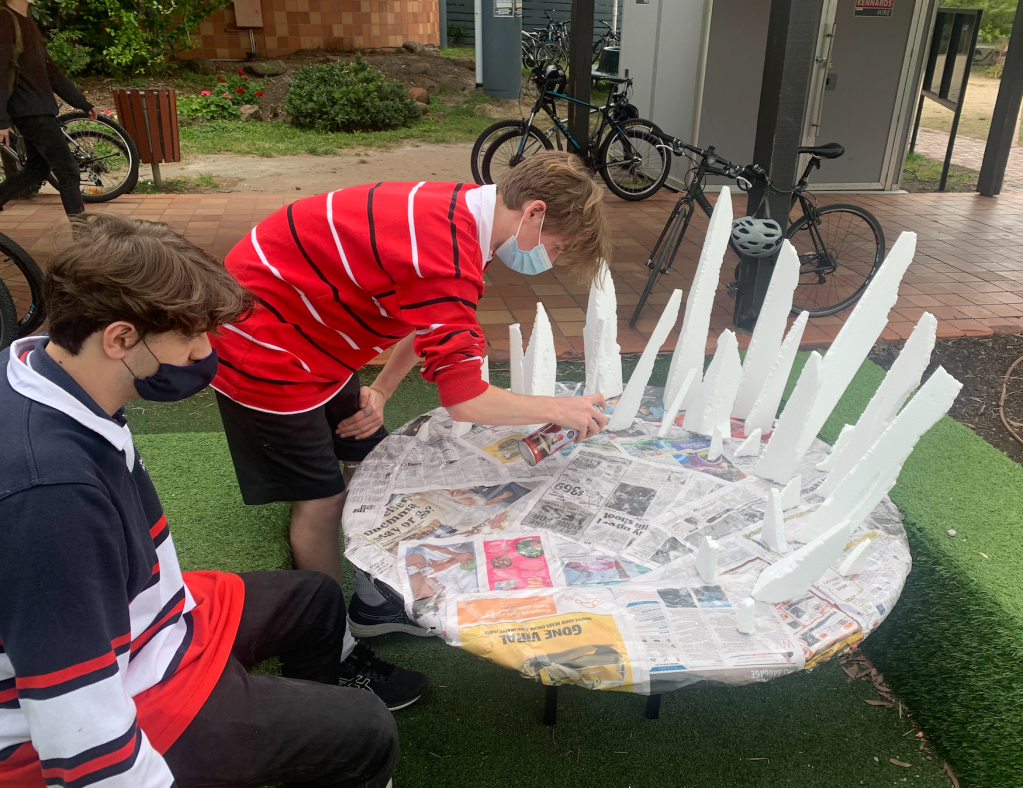
In our practical class, we learned to upcylce old materials to create new props in a sustainable way. Our group created an abstract dungeon/cage for Orlando’s character. The dungeon almost represents a throne, however is made of gravel, highlighting the inequality Orlando’s character faces and a symbolic juxtaposition to the higher classes. To create the dungeon, we hot glued pieces of cut up styrofoam onto a wooden base, sprayed it down with black paint to give it the “gravel effect”, and wrapped the base in newspaper. The newspapers acting as a symbol of how his character was portrayed in the media at the time and how his image was controlled by them. He is trapped in a dark and cold environment, and the public views him in ways the media wants him to be seen. 

The Unpainted Prop
Adding an extra coat to make sure the prop is strong

Posted in Development, Frankenstein

Frankenstein – Lighting

In our production of Frankenstein, we’ve used various different lighting techniques to convey the films message and symbolise the key themes about monstrosity and power. Lighting is vital in theatre as it can help emphasise parts of the scene, stress tension or fear, evoke emotions, and deeply enhance a piece of theatre.

In the opening scene ‘The Creature’s First Steps’, all light is blacked out, with a single white spotlight shining on the creature, in aims to symbolise the oblivious and naive nature of the creature. However, when Frankenstein appears and starts shouting at the creature, the lighting changes, the piano music stops, and dull lighting fills the set, representing the dull atmosphere the creature has been brought in. We use cool colours in emotional parts of the scene, such as the ending, where Frankenstein’s father realises what he’s son’s done. These cool tones help stress the feeling of isolation and sadness, whereas in other scenes, that depict murder/torment, we use red LEDs to exaggerate the fearful moment, and create tension and anxiety on stage.

In contrast, Frankenstein has been redone using many different kinds of theatre lighting in productions in the past. In the 2011 adaption from Danny Boyle, 3,000 filament light bulbs were used to light up the ceilings in scenes. Though this wouldn’t be something we’d be able to recreate in our production, this is a unique concept we could try to modify and incorporate.

Luminaire suspendu & Arbre démontable | Scenic design, Cool ...
The lighting effect used in Danny Boyle’s adaption, we can recreate a similar look by hanging string lights together, in combination with the spotlight or LEDs.
Posted in Development

Production Role: Lighting & Sound

The Production Role I’ve chosen for our show I See Monsters, is lighting and sound. As I’ve learned, this is an extremely vital part of the productions we perform at our school, and in theatre as a whole. Lighting can evoke emotions, reactions, and emphasise parts, or a whole scene. In I See Monsters, our L+S crew have decided to give each play from the 4 a different colour pallete. We do this to not only differentiate the plays in I See Monsters, but also evoke different emotions from the audience, and create a specific mood and atmosphere.

For example, in Pygmalion, a romantic-comedy style play, though most of the lighting will be naturalistic, we’ve chosen light pink as it’s ‘main colour’, to symbolise romance, and a generally happy play. In Dr. Faustus, we’ve chosen to colour red, and it is focused on lucifer and demons. In Frankenstein, we’ve chosen green, and Blue for Salome.

Currently, we are still focusing on improving our lighting skills, learning how to properly use the lighting program and create cues to play on stage. We are particularly looking at LED lights and their impact on stage, compared to other coloured lighting like the spotlights, and how we can incorporate them into our production. We’ve also been experimenting with different effects, including the disco ball, to create a Theatre Of Cruelty inspired effect. As of now, we are at the beginning stage of creating the official lighting cues that will be used in the production.

Posted in Development

Rehearsals: Pygmalion & Salome

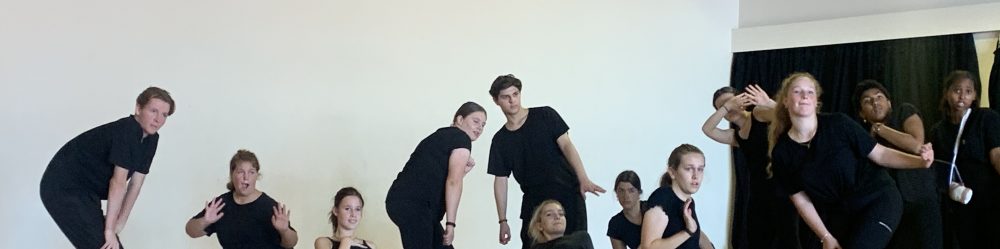
As we have begun the development stage of our production I See Monsters, we have begun rehearsals for the production. I play Colonel Pickering in Pygmalion, Jokanaan in Salome, and Victor’s father in Frankenstein. In Act 2 of I See Monsters, I particularly have a lot of quick changes, so it’s something I’ll need to especially prepare for.

Pickering is the sidekick for the main antagonist, Henry Higgins. This role depicts an upper-class ‘snob’ kind of character, and requires me to have very proper mannerisms, and speak in a posh British accent. My main focus for Pickering however, is that though he has few lines, he is still featured in many scenes, engaging with the current situation to support Henry. Because he has a lot of stage time with little dialogue, I need to focus deeper on his mannerisms and reactions to what’s happening in scenes to still give his character life and personality, and still keep him as a vital part of the scene.

Playing Jokanaan in Salome is my biggest challenge, a lot of the dialogue is dated, and especially difficult to understand. To improve, I need to research more into the script to truly understand everything being said, so I can express it right on the play. This is something we (the Salone cast as a whole) can improve on together as a group. Jokanaan’s staging is also quite different to a regular play, as I won’t be moving much but sitting down as I play a ‘floating head’. This will be even more challenging as I won’t be able to emphasise Jokanaan’s emotions through body movement, and will have to rely heavily on facial expression and tone in the dialogue.

Victor’s father in Frankenstein is a smaller role, however he is a vital character towards the end of the play. He was once very loving towards his son, yet it quickly changes to sadness and especially disappointment. As Victor’s father also has the last lines in the Frankenstein, I want to truly embody the emotions Victor’s father would’ve felt, keeping them big, yet emotive and realistic.

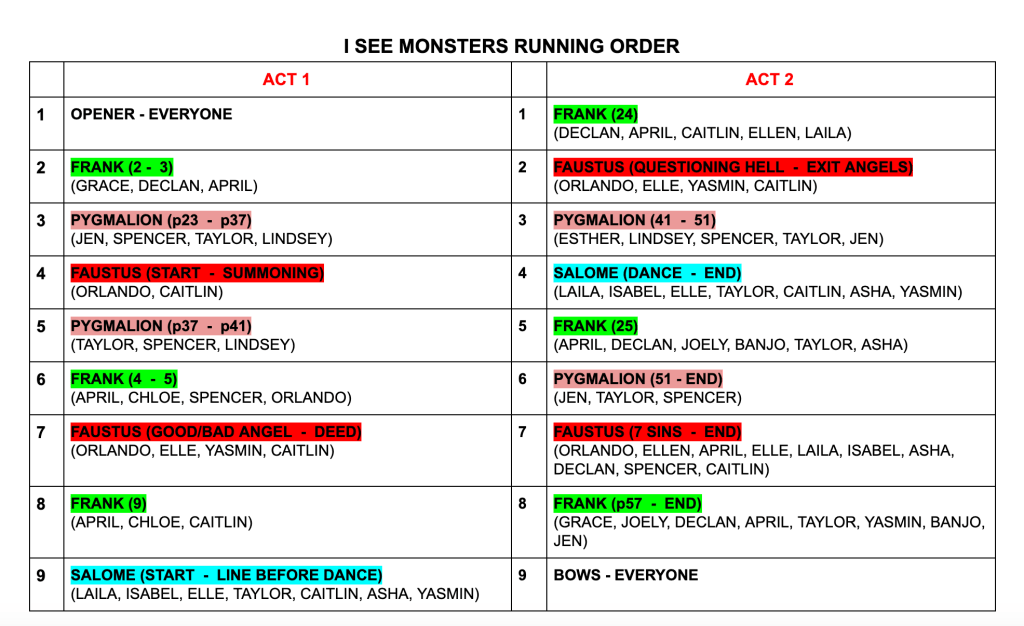
The running order for I See Monsters.
Posted in Development, Pygmalion

Pickering: Character Profile

As we are currently in the Development stage of our production I See Monsters, we have begun to create character profiles for our roles in the production. This helps us get a feel of our character and who we’re playing.

Pickering – Role: Henry Higgins’ Sidekick

In social situations, Pickering is often a follower. Especially when it comes to Henry Higgins, he looks up to him in almost a Godly way, and believes Henry is full of wisdom. He often agrees with him and has similar views to him, but he’s not afraid to call him out if he’s getting out of hand. Pickering is part of the upper class, he’s quite a snob and looks down at the lower classes. Even laughing at them at times. However, throughout the play, and getting to Eliza better, he too does realise they are still human when it goes too far. At the end of the play, he even apologises to Eliza, showing that he does have a caring side to him. Movement wise, he sits and walks very properly, further establishing his social class. He sits with a good posture, however at home he can relax a little more.

Image result for pickering pygmalion
Pickering in My Fair Lady