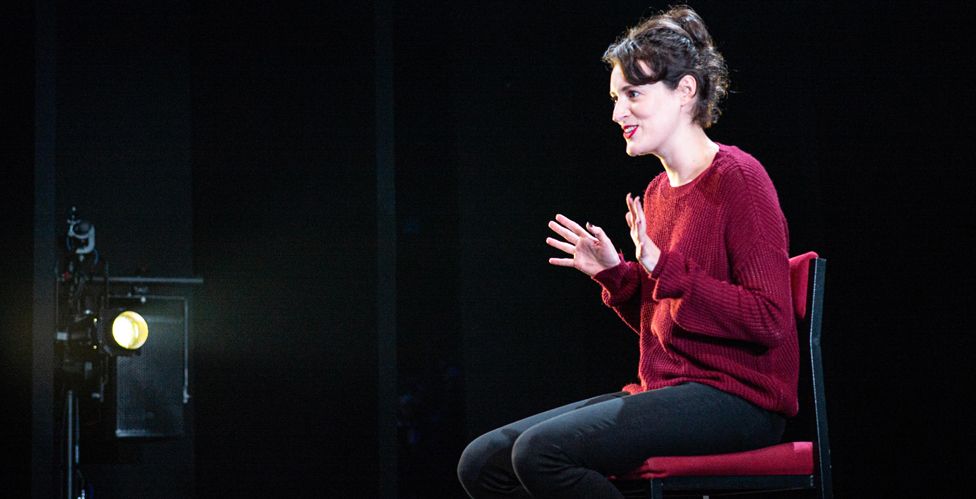
In Fleabag, starred and directed by Phoebe Waller Bridge, alongside Vicky Jones, the cast and crew create a raw, vulnerable performance; with many laughs along the way. Set and costume designer Holly Pigott uses a minimalistic yet effective set to draw more emphasis on Waller Bridge’s performance. The red inner square contrasts the outer white part of the stage, enhancing elements of feminist theatre in a broad theatrical style. Pigott matches the red inner square in costuming with Fleabag’s red jumper worn on stage. Emphasising Fleabag’s importance on the piece and significance. Sound Designer Isobel Waller Bridge uses sound effects to establish settings and add comical effects to Fleabag’s stories.
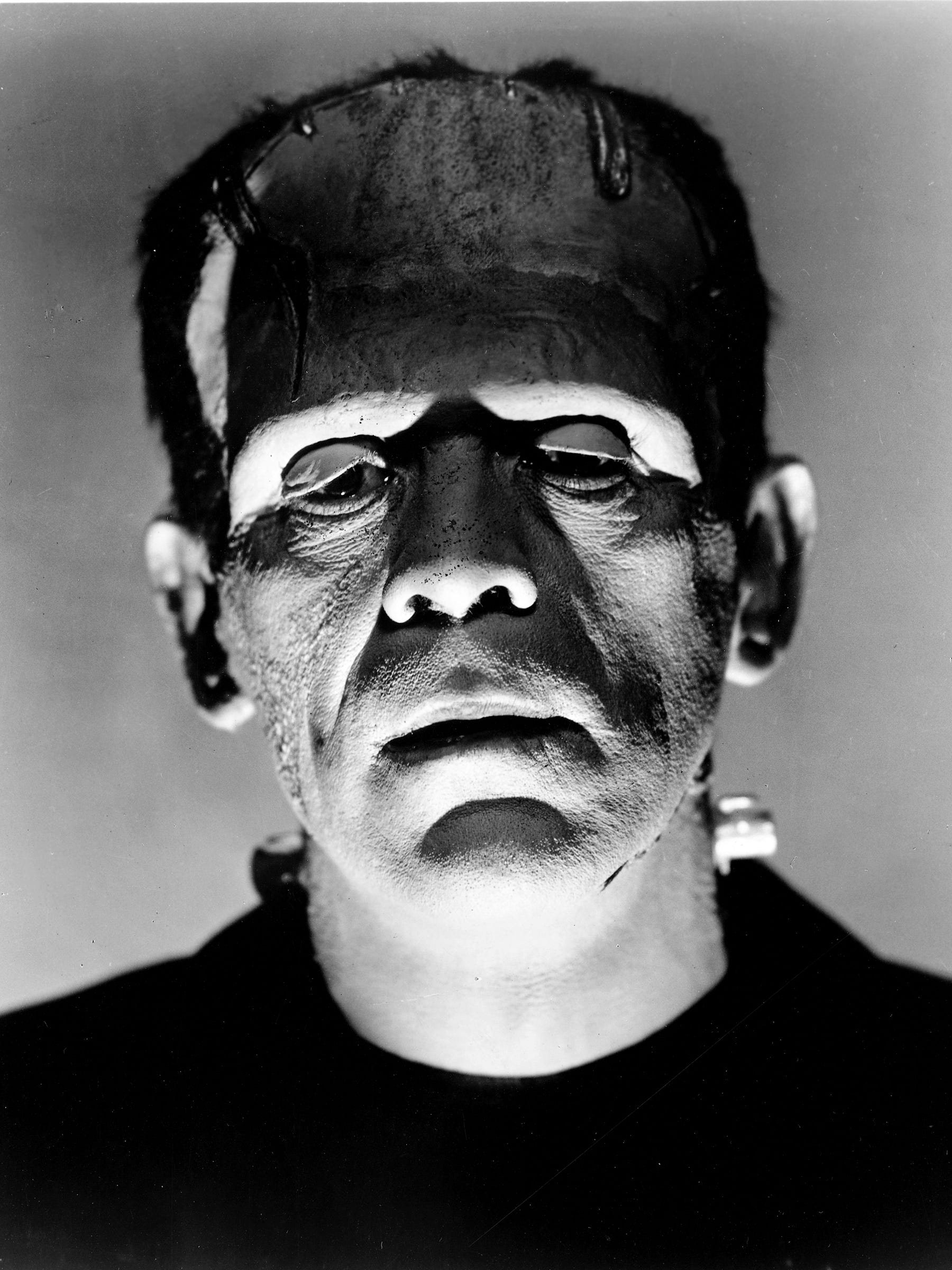
Mary Shelley, born August 1797, was an English author best known for her novel and playwright, Frankenstein. Frankenstein first gained traction when it was entered into a young-writers contest, were novelists had to compete to write the best horror story; and Shelley’s, once published, became immensely successful. People feared Frankenstein because it was often though something similar could take place in real life, and the way it manages to cover dark and serious topics captivated many.
Frankenstein however, is also known for its much deeper meaning. At the beginning on the story the create is innocent, and means no harm. However, after being exposed to the harsh world and wrong doings of Victor, the creature becomes evil, and learns from what he’s seen. Shelley’s story helped to reflect on society, and how man can be just as evil if not more than an ‘ugly beast’ and how strong our influence can truly be on others. Even to someone as innocent and oblivious as the creature.
Born in Thornton, United Kingdom, in April 1816, Charlotte Brontë is an English poet and novelist, best known for her book’ Jane Eyre’. First published in 1847, the novel’s story has been passed on for decades and in the 1990s, was adapted into a theatrical play.
Jane Eyre on theatre
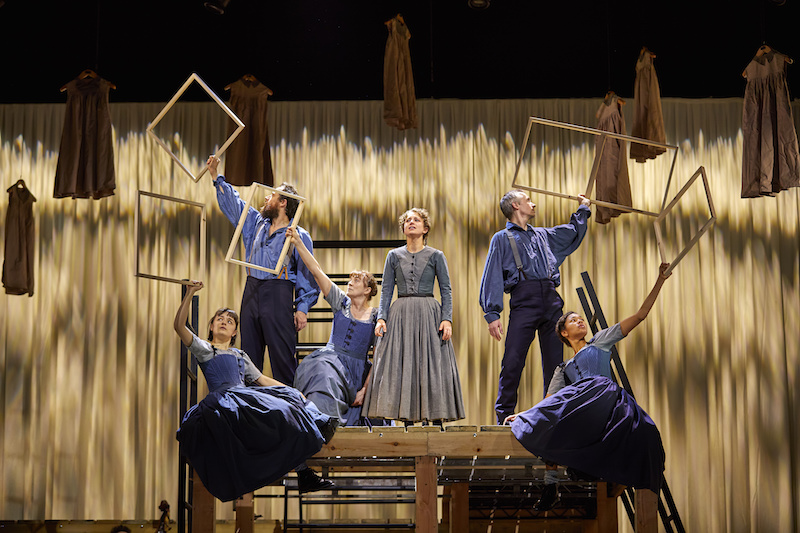
Jane Eyre was originally a gothic story set in the 19th century about an orphan trying to find independence and get out of her poor situation. As it was written and set in the 19th century, the costumes and sets are no different. The sets were also inspired by this era.
The sets used in Jane Eyre were also known for being unique. This included the use of wooden props and furniture, like platforms, ramps, and even metal ladders
An example of Jane Eyre’s unique sets, here are the metal ladders used.
Asian theatre is a group theatrical styles originating across Asia that can be traced back to 1,500 BCE, roughly 1,000 years before Greek theatre established. The earliest Asian theatre can be found in Chinese theatre, which integrated dance, music, and acrobatics, also commonly known as ‘Dance-Drama’. These performances were unique and known for steering away from naturalism, and expressing emotions, spirituality, and attitudes and ideas using music and dance.
A diagram of an apron stage
In many traditional Chinese shows, the acting space was an apron stage, which means parts of stage expand past the curtain at the front and into the audience seating area. However, Chinese theatre used their stage space in very unique ways. One side of the stage is dedicated to the orchestra, where they play throughout the show. There is also no extensive detail to props or scenery either besides a simple backdrop, to let the audience pay attention more to the actors costumes and makeup.
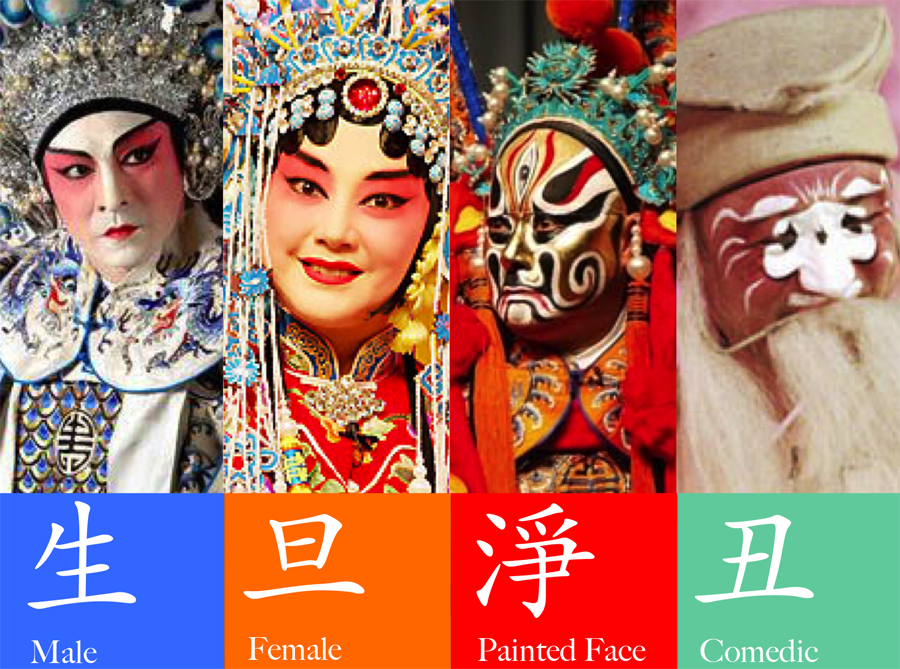
Actors wearing traditional Chinese theatre costumes.
An example of ‘Beautifying Makeup, and facial masks.
In chinese theatre, different coloured and patterns robes were worn by actors to distinguish different characters. Along with costumes, facial makeup was also a vital part of Chinese theatre, especially in operas. ‘Beautifying makeup’ was most commonly seen on women and men. This is where a white oil-based face paint is used as the base, their eyes, cheeks, and lips are covered in red, while a water-based black ink aligns their eyes and eyebrows. In Beijing operas, they used ‘facial masks’ and completely covered their faces with face paint. However, these weren’t just looks, the colours used on their facial masks had different meanings, and distinguished the personality of the specific character.
Tang Xianzu, also known as the greatest playwright of Chinese Theatre, also included many facial masks in his Chinese Operas, including ‘Four Dreams’, a play still performed in theatres and celebrated today.
Elizabethan Drama is a style of theatre originated in 1550s England, during the reign of Queen Elizabeth 1. It was originally only recognised as a ‘period’ of theatre, however, as it grew its own unique characteristics and theatre conventions, it is now recognised as a style of theatre itself. Elizabethan Theatre was also known as ‘renaissance theatre’, as Elizabethan dramas were much more morally complex and diverse opposed to many dramas in the past which focused on simple morality plays.
Elizabethan Theatre Stage
Elizabethan Theatre was most often performed in public theatres, however many were still open-air theatres as natural daylight was still vital for everything to be seen on stage. The ‘Apron’ stage was most commonly seen, which meant the stage was surrounded by the audience on 3 sides.
Most (and all early) Elizabethan plays were featuring men, as many women were not allowed to be actors during this time. The costumes male actors wore were often a shirt with stockings, sometimes corsets were worn too. Once women were eventually featured in Elizabethan plays, they commonly wore multiple-layered gowns, and wore makeup to emulate Queen Elizabeth 1.
An artwork, showing an example of Elizabethan costumes
Common props seen in Elizabethan theatre consisted of daggers, small, but sharp edged blades, bottles of alcohol, typically wine, whips, helmets and armour for fighting scenes, candles and torches, manuscripts, etc. Larger props and furniture was eventually introduced, such as beds, thrones, cannons, etc.
Common conventions of Elizabethan theatre that helped it distinguish itself as a genre included ‘aside’, where characters are ‘on the side’ of the stage, and address the current situation in the story to the audience directly. Eavesdropping was also a common plot trope, and a convention still used in theatre today. One of the biggest conventions that set Elizabethen theatre apart however, was its use of poetic and dramatic dialogue. An Elizabethan era playwright who was known for this unique kind of dialogue Christopher Marlowe, famously known for his tragedy plays.
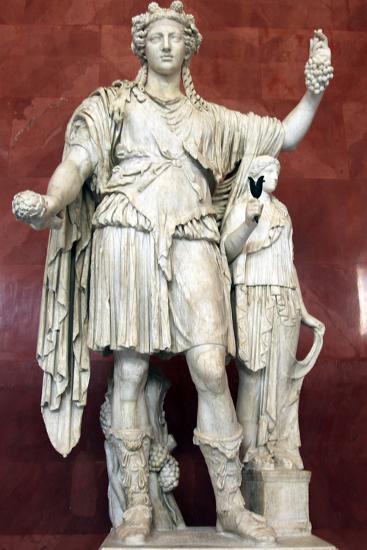
Being one of the first styles of theatre in history, Greek Theatre developed in 6th century BCE. It was created to pass down Greek history and tell their stories in an artistic form. Earliest Greek Theatre focused to honour their God Dionysus, the son of Zeus. He was the God of wine, fertility, and revelry. Many conventions of ancient Greek theatre are still passed down into modern theatre today.
Statue of Dionysus
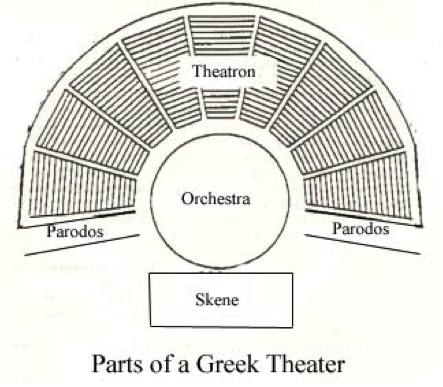
Dionysia was an ancient festival made to honour Dionysus and was were most early Greek Theatre was performed and developed. ‘The Theatre of Dionysus’ was the first-ever Greek theatre built, and after gaining popularity, similar theatres had spread across Greece. This included the Orchestra, a circular stage where performers would sing, dance and act. The Theatron, where spectators sit above the orchestra and watch the performance, the Skene, which was the back of the stage, also commonly decorated and used as a backdrop for the play, and were actors could enter/exit in, and the Parados, where chorus members could make their entrance/exit, and spectators could leave after the show. These theatres were also outdoors and open, which allowed lots of natural light for the shows.
Greek Theatre Stage Diagram
Greek Theatre consisted of three principal dramatic forms, consisting of tragedies, comedies and satyr plays. Aristophanes was a famous playwright, and known as one of the key figures in establishing ancient Greek comedy. He was most known for his plays about mocking powerful men in politics.
An example of Greek Theatre Costumes
Most costumes and makeup in Greek theatre stayed similar, most actors wore Chitons (similar to a robe), Chlamys (a short cloak) and Kothurnus (lace up-boots). What makes Greek Theatre costumes unique however is their use of different masks. These masks were used to represent different emotions and facial expressions, making it especially clear for the spectators at the back of the theatron. Many early Greek theatre plays often only consisted of one to three actors, so the masks helped distinguish different characters.






 Taylor's Document Diary - VCE Theatre Studies 2020